INDUSTRIES / INDUSTRIAL PRODUCTS
Industrial products sourced to specification.
Industrial sourcing often depends on exact specifications, materials, tolerances, quantities and application requirements. SOURDEN helps buyers identify suitable suppliers and coordinate the sourcing process around those requirements.
WHAT WE CAN SOURCE
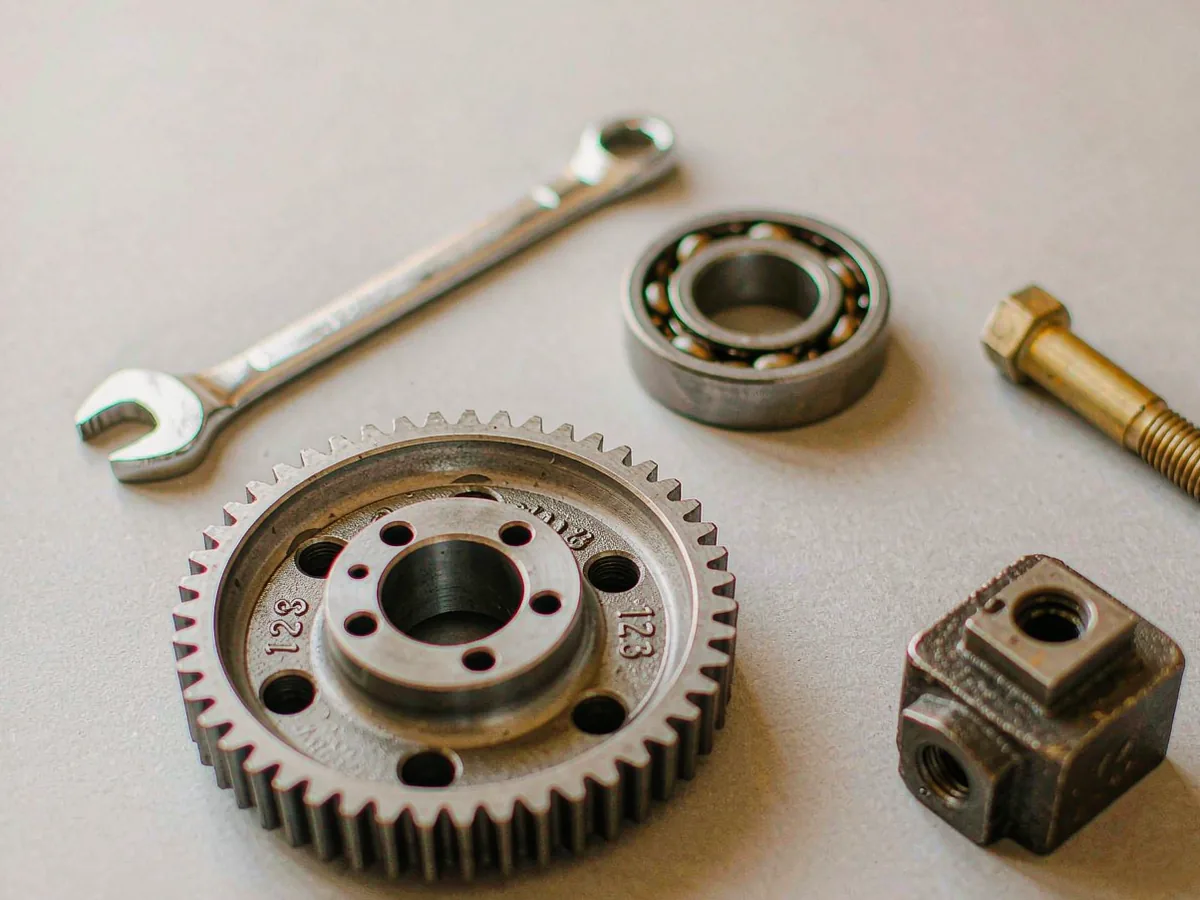
Components, hardware, tools and made-to-order parts.
This is the category where the description of the product matters most. A component is defined by its drawing, its material and its tolerance rather than by its name.
- Industrial components
- Hardware
- Tools
- Machinery accessories
- Metal products
- Plastic components
- Fasteners
- Custom parts
These are examples rather than a fixed list. Here a requirement is usually carried by a drawing, a specification sheet or a physical part, and any of those three is a better starting point than a product name.
WHAT BUYERS USUALLY NEED
A specification, a drawing, or a part.
Industrial requests are unusually specific about where they begin — some arrive with a drawing, some with a physical part, some with nothing but a problem to solve.
- Exact product specifications
- Custom manufacturing
- OEM/ODM sourcing
- Drawings and samples
- Material requirements
- Repeat production
OUR APPROACH
One process, whatever the product.
Sourcing follows the same sequence from your first requirement to the shipment. The category changes the details — not the route.
- 01
Requirements
Share the product, specifications, quantity and destination.
- 02
Supplier Research
Find suppliers whose product range and capability fit.
- 03
Comparison
Compare specification, price, MOQ and lead time.
- 04
Order
Coordinate the purchase and production communication.
- 05
Quality Check
Check the agreed requirements before the goods leave.
- 06
Shipping
Coordinate the movement from China to your destination.
SOURCING CONSIDERATIONS
What a manufacturer needs before quoting.
Most of this list is documentation. That is not a formality in this category — it is the difference between quotations that can be compared and quotations that have to be re-done.
- Material
- Dimensions
- Tolerance
- Drawings
For technical or safety-critical components, buyers should provide complete specifications and obtain appropriate professional engineering or compliance validation before use.
RELATED SERVICES
The sourcing process doesn't stop at finding a supplier.
Depending on your project, SOURDEN can support different parts of the sourcing process — from supplier research and verification to purchasing and quality control.
- 01
Product Sourcing
Find suitable products and suppliers based on your requirements.
- 02
Supplier Verification
Evaluate supplier fit before moving forward.
- 03
Purchasing Management
Coordinate purchasing, supplier communication and production progress.
- 04
Quality Control
Check agreed product requirements before shipment.
WHO WE SOURCE FOR
Built for buyers at different stages.
You don't need a large purchasing team or huge order volumes to explore sourcing from China. SOURDEN works with buyers based on their actual requirements and current stage.
- Small Wholesalers
- Independent Retailers
- Local Shops
- Growing Brands
- Individual Consumers
NO FIXED MOQ FROM SOURDEN
Source at your scale.
The practical MOQ will depend on the product and supplier. Not every supplier will accept small quantities.
FAQ
Questions about sourcing industrial products.
Can you source custom industrial parts?
Yes — in this category that is the common case rather than the exception. Custom parts are normally quoted from a drawing, a specification or a sample, and the first step is confirming that the requirement is complete enough for a manufacturer to quote against.
Can I provide drawings?
Yes, and it is the most useful thing you can provide. A drawing can be passed to manufacturers to quote against, and it also makes the quotations comparable, because each one is answering the same document rather than an interpretation of it.
Can you source based on a physical sample?
Yes. A physical part can stand in for a drawing, and manufacturers will often work from it directly. What a sample does not always carry is the material and the tolerance, so those usually have to be stated separately — which is worth doing before quotations are compared.
START WITH A REQUEST
Looking for something specific?
Tell us what you're looking for, including your product requirements, quantity and destination.